
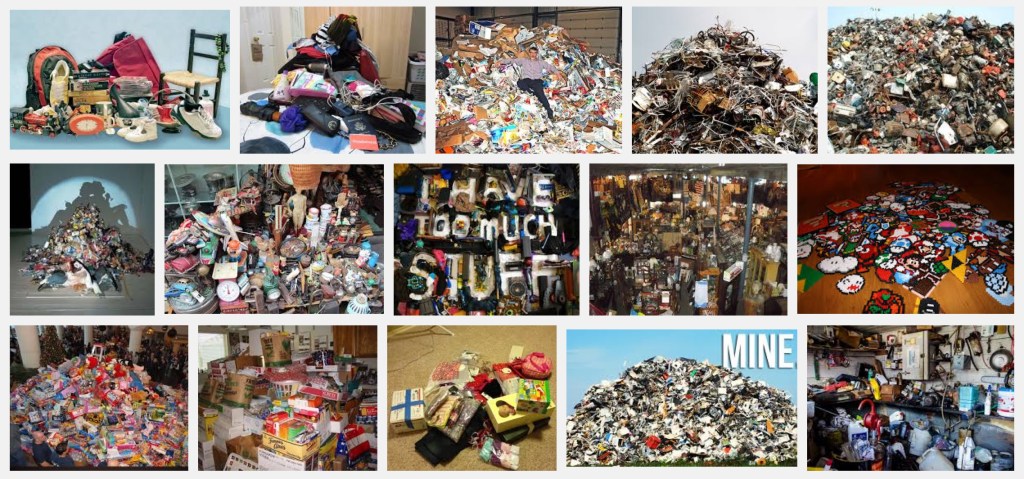
I recently started to see Reels that feature people showcasing all their yarn, fabric and craft supplies. I have a decent amount of all of these, but I have to say that if I were entered into a competition for “she who dies with the most,…“, I wouldn’t even place in the top 50th percentile!
This realization did 2 things for me: 1) it made me feel a little guilty about comparing myself to others and using that comparison to feel a little better, and 2) it inspired me to do MORE about my stash while it is still manageable.
I have been on the journey toward intentional shopping for some time now, as I have shared in a few blog posts on this site, including this exploration of the role of dopamine in our shopping habits. I have been practicing the pause each time I have felt an impulse to shop, and if I am HOME when that impulse hits, have been able to go into my sewing/craft room and find the satisfaction I thought I needed to get in a store – already here and ready to be used in a project. I even was able to pivot as I left work yesterday and felt the urge to shop our local crafting thrift hub, choosing instead to go home.
These incidents have got me thinking that as much as we giggle among ourselves about our stashes, we just might have a serious mental health challenge in our midst!
I did some light reading on hoarding in general, and came across an academic article on hoarding specific to textiles, “Secret Stash: Textiles, Hoarding, Collecting, Accumulation and Craft” by Kirsty Robertson. In her piece, the author explores the intersection of textiles, craft culture, and hoarding, raising nuanced questions about where creative collecting, emotional attachment, and pathological accumulation diverge.
Robertson situates textile hoarding within the broader history of how hoarding came to be seen as a mental health disorder. Hoarding was formally recognized in 2013, in the DSM‑V. She notes that while up to 5% of the population is affected, the cultural conversation around hoarding often oversimplifies it as a purely individual pathology.
NOTE: shame plays a central and often debilitating role in the lives of people who struggle with hoarding. It influences how the condition develops, how it is experienced, and whether individuals seek help. It is fueled by stigma and misconceptions, such as a common public misconception that portrays hoarders as lazy, careless, or choosing to live in cluttered conditions.
Robertson’s essay focuses on the accumulation of textiles and yarn by crafters, and she argues that these stashes are not just excess, but serve as deeply meaningful storehouses of memories of past projects, potential for future creations, and they often function as emotional and creative resources.
At the same time, they can generate guilt or feelings of excess when they grow beyond intended use. This ambivalence complicates the idea that such accumulation always signals pathology. In other words, it’s a mixed bag.
Robertson cautions against framing craft accumulation solely as a medical issue or psychological pathology. Descriptions of large craft stashes reveal complex emotional, cultural, and creative dynamics, undermining reductive narratives that position hoarding as simply a psychological issue to be “fixed.”
In the closing section, Robertson asks whether hoarding might be understood less as a brain‑based illness and more as a social response to late capitalism, an environment saturated with inexpensive, easily accessible consumer goods. This led her to suggest something I have discussed in several blog posts – the boundary between hoarding and ordinary overconsumption (see “The Consumerism of Crafting“).
Rather than treating craft stash accumulation as simply a disorder, Robertson reframes it in her essay as a meaning‑rich cultural practice shaped by memory, creativity, capitalism, and the emotional life of makers. This complicates, or maybe even excuses, the usual distinction between pathological hoarding and everyday collecting, as she seems to argue that craft materials occupy a unique, symbolically loaded space.
While I don’t disagree that our craft stashes “serve as deeply meaningful storehouses of memories of past projects, potential for future creations“, if they are creeping outside of our craft rooms and invading other spaces, I think it deserves some of our attention.
I like to start with asking myself some basic questions. Since a decent amount of my yarn stash came from incidental browsing in Michaels or Joann stores, the first question I ask is “if I came across this yarn today, would I buy it?“
If the answer to that is NO, the yarn goes into the THRIFT bag to be recycled at a thrift or resale shop. I have found that a decent amount of my stash yarn falls into this category. This has made it (somewhat) easier to decrease my collection.
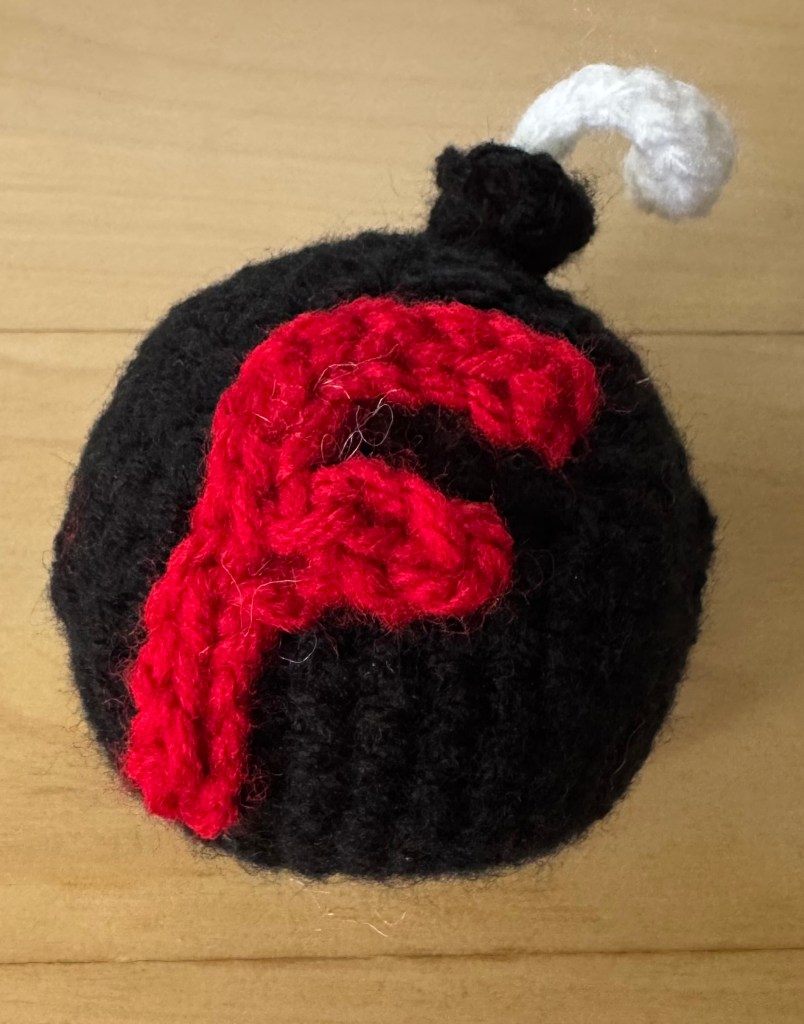
The NEXT question I ask myself is whether I will make anything with the yarn that I am considering, before buying more. This can be a bit more difficult, as I can’t always account for that late night inspiration to make some little thing with leftover yarn. I have done this with lip balm holders, air pod cases, and even F-bombs!
I address this challenge by asking harder questions about how much I actually like the texture and/or color of the skeins in question. If the answer is even a half-hearted “meh“, into the thrifting bag it goes.
The last question I ask is whether it is likely that I will ever get to making something with that yarn in the next 20 years. This is harder because it requires that I consider a lot of “what ifs“. These questions are the devil when it comes to de-stashing.
- what if I have to go into the hospital and want to crochet or knit?
- what if I run out of money and want to crochet or knit?
- what if …. (fill in some other disaster scenario)?
These are straight up foolish, for a couple reasons. If I had to go into the hospital, I could ask my kids to go grab any number of the project bags in my house with a WIP ready and waiting, so that negates the first “what if“. As to the second one, while this is always a possibility for any of us, it is highly unlikely.
What we need to understand is that these questions (fears?) align with something common in “collecting” behaviors.
From research studies on hoarding we know that people who hoard often operate from a belief that resources are scarce or will become scarce, even when this is not objectively true. This mindset leads to stockpiling things as a “protection” against some imagined, future lack.
On my other blog site, I have written for YEARS about the spiritual side of life. While I have a lot of criticism for the organizations that have promoted and made money in dubious and questionable ways by promoting what I consider to be “get rich quick” schemes, there have been some worthy wisdom lessons to consider along the way.
One of these is the power of self-talk to change habitual thinking. When I find myself feeling the urge to shop, my questions (above) help me reframe that into a more honest assessment of the impulse. When I am feeling a sort of PANIC around letting go of things, I soothe my angst by reminding myself that not only am I blessed with plenty, but surrounded by family who is also blessed with plenty. In other words, I’m not going to find myself in a fabric or yarn desert unless the world is imploding, and then I likely won’t care.
I’m thankful for the Reels that helped allay some of my fears that my own stashes were out of control, AND for the motivation that seeing them has given me to continue to dig into my commitment to clear our, and minimize my collections of fabric, yarn and other craft supplies.
It’s a journey, which means it’s one step at a time.
Happy stitching, and de-stashing, to all!!
(C) 2026 Fiber Harmony / Stitch ‘n Dish
 Fiber Harmony (Stitch 'n Dish)